The villa of Bruckneudorf is located at a distance of 11 km. from the civilian town of Carnuntum. The area of the ‘Streubauhof’ (farmstead with irregularly arranged individual buildings) was already extensively investigated in the framework of early excavations; however, based on the evidence provided by more recent excavations in the main building, more concrete information has been obtained. Evidence of a wooden structure in phase 1 is important; the construction already anticipated the variants of the interior courtyard house with portico, carried out in stone in phase 2. Based on a inscription here secondary used in late antiquity, in the older scholarship the construction of the site has been connected with M. Cocceius Caupianus pr(aefectus) oder pr(inceps) c(ivitatis) B(oiorum).
The interior courtyard house with portico is associated with the oldest stone building phase in the 2nd c. A.D., while the lay-out of the interior courtyard house with a portico-risalit-façade belongs to phase 3 (late 2nd/early 3rd c. A.D.).
|
|
|
|
|
Villa at Bruckneudorf |
Villa at Bruckneudorf |
Villa at Bruckneudorf |
The villa at Regelsbrunn, investigated in early excavations, lies at a distance of 5 km. from the civilian town of Carnuntum. Here, in an almost square piece of enclosed property, lies the central structure with portico, to the south of which lies a granary. The dating to the early 2nd c. A.D. is based on the discovery of a fibula Almgren 73a and of stamped bricks from the 14th Legion. The choice of site immediately in the Limes region is noteworthy and at the same time atypical; this location was based on the proximity to the market site of Carnuntum.
|
|
|
|
Regelsbrunn |
In the hinterland beyond Carnuntum and Scarbantia, numerous villas are attested; the date of their construction however cannot be securely determined, since they mainly have to do with findings from old excavations. In the distribution map every farmstead whose construction can be assumed to have commenced in the 2nd c. A.D. has been recorded. The preferred settlement areas lay on the slopes of the Leithagebirge up to near the shores of the Neusiedlersee.
|
|
The villa at Winden am See is found here; the building from Period 2 has been reconstructed as a Corridor House with portico, and has frequently been cited in the literature as exemplary for this type, even though the excavation findings are very incomplete. The ground plan handed down from Period 2 ought to reflect the state of the structure in the 3rd century; the earlier Period 1 of the 2nd century A.D. (marked in red on the plan) has also been partially recorded. |
|
Winden am See |
|
|
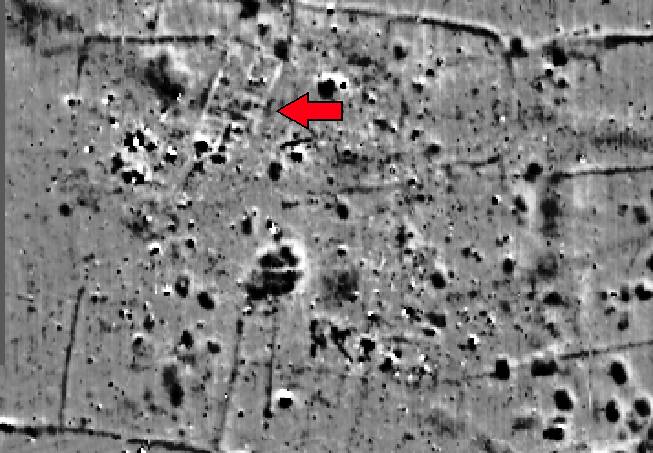
The villa at Halbturn is situated differently; its construction on flat land can be explained by its proximity to the market site of Carnuntum. The main structure, which apparently was expanded over a number of building phases, should originally have represented a Portico Villa. |
|
|
|
|
Halbturn |
Halbturn |
The preferred location for villa foundations was the area in the region of the Amber Road on the slopes of the mountain spur of the Leithagebirge. Sites in flatland without terrain features are less frequent. Villas are seldom found in the zone of the Limes (border).
|
|
|
Villas in north-western Pannonia |
It is only due to the finds from Bruckneudorf that anything more concerning the oldest construction phase of a villa of the late 1st c. A.D. can be determined. (t.p.q. Coin of Galba, 69).
H. Sedlmayer
F. Daim - N. Doneus (Hrsg.), Halbturn I. Das kaiserzeitliche Gräberfeld und die Villa von Halbturn, Burgenland: Naturräumliche Voraussetzungen, Prospektion und Vorbericht. Monographien zur Frühgeschichte und Mittelalterarchäologie 10 (Innsbruck 2004).
B. Saria, Der römische Gutshof von Winden am See, Burgenländische Forschungen 13 (1951).
H. Zabehlicky, Zum Abschluss der Grabungen im Hauptgebäude der Villa von Bruckneudorf, ÖJh 73, 2004, 305-326.