
See this text in
Burial practices and facilities are among
the most important and conservative categories of archaeological material.
Studies of them reveal important ethnic and cultural aspects of the ancient
communities that inhabited a given territory.
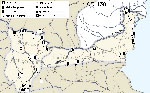
In the lands which later on became part of the provinces Moesia Superior and Inferior, the period 2nd – 1st c. BC is characterized by a high degree of unification of the burial practices and facilities used. Flat and mound necropolises have been witnessed, the latter being predominant. Tomb mounds are widespread to the west of the Morava River. The main ritual was cremation. The remains of the deceased were collected in a ceramic urn laid down in a small pit in or on the ground. The burial practices and facilities in the necropolises along the western shore of Ponta are somewhat different. No unification of the burial practices and facilities is observed in the different Greek polises. The necropolises of Odessos (mound and flat) are characterized by bi-ritualism and the use of both urns and ordinary burial pits and more impressive burial facilities – tombs made of stone blocks and tombs with a semi-cylindrical arch. The situation in Dionysopolis is similar, judging from the limited information available. Bi-ritualism is also present in the necropolises of Kalatis but inhumation is predominant. In the tombs with cremation, the burning was done on the spot in the burial pit, whereas different types of tombs, constructed from stones, were used in inhumation. Tombs with a semi-cylindrical arch are also widespread. Tomi’s Hellenistic necropolises are characterized mainly by cremation on the spot in the burial pit and the remains were sometimes covered by tiles laid in two layers. The complexes from Histria studied show the practice of bi-ritualism, the aristocratic ritual being cremation on the spot under a mound, sometimes together with cremation and mortal remains in urns. Inhumation graves are rare and poorer. In the necropolises from the town territory only graves with inhumation are known and the babies were put in amphorae. The review of burial facilities and practices from the pre-Roman age shows that while in the interior of the territory unification gradually took place, significant differences, resulting from different factors, can be observed in the necropolises of the coastal Greek polises.
After the military and administrative assimilation of the territory by the Romans changes took place in the field of burial customs. The joint use of flat and mound tombs continued. The ritual of cremation was practiced almost without exception during 1st c. AD. An accepted sign of the degree of Romanization is the gradual introduction of inhumation from the beginning of 2nd c. first in the city necropolises from the coastal areas and limes. Throughout the 2nd c. the two rituals co-existed together. From the beginning of 3rd c. inhumation gradually began to dominate until it became the rule towards the end of the century.
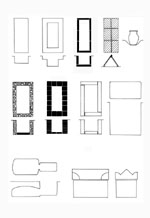
In the period 1st – 3rd c. a variety of burial facilities can be observed. Almost all types of graves were used both in flat and mound necropolises. The ordinary pit in different forms was used for both rituals. This type is among the earliest facilities used in Moesia until the middle of 2nd c. exclusively for cremation (Tomi, Skupi). Some tombs with cremation on the spot under a mound (village of Smochan, Lovech region) are characterized by a rich burial inventory.
 |
 |
 |
 |
A version of this type of burial facility associated with the Thracian ethnos
is the round burial pits under a mound, fenced with stones (village of Drashan,
Vratsa region). In the next periods the ordinary burial pit was used on a large
scale in the necropolises of the Roman cities and settlements (Histria, Tomi,
Viminacium, Naisus, Skupi, Mala Kopashnitsa, Abritus, the region of Nicopolis
ad Istrum). The plastering of the burial pit with bricks and tegulae is a late phenomenon on a limited territory (Oescus, Viminacium, Sexaginta
Prista). The two-layer cover of the pits with bricks and tegulae was imposed
from the 2nd c. onwards and is more characteristic of the city necropolises (Oescus, Marcianopolis,
Skupi). The rectangular or elliptic 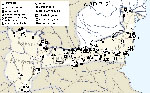 pits, shaped amphitheatrically, are a more
complex burial facility used exclusively in cremation.This type can be witnessed
on a wide territory and in flat and mound necropolises mainly in 1st – 2nd c., but also after that (Tomi, Abritus, Viminacium, Skupi, Noviudunum, Mala
Kopashnica, Ulpianum). This burial facility can be related to
influence from Asia Minor, mediated by the Greek polises along the west coast
of Ponta,
mainly Histria and Kalatis where there were traditions from the pre-Roman
age. Cremation
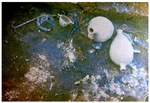
in urns was practiced almost everywhere but in a limited fashion. The ceramic
urns demonstrate a continuation of the pre-Roman age and are more characteristic
of the necropolises of smaller settlements (Dolni Lukovit, Radyuvene, Mala
Kopashnica, Enisala). The stone and metal urns, despite being rare, are
evidence of the Roman influence and can be found mainly in the city necropolises
(Naissus,
Viminacium, Skupi). Only in Tomi have shaft graves with inhumation been evidenced for 3rd c., related to the Syrian influence. A unique form, observed only in Singidunum
and Viminacium in 1st – 3rd c. are the shaft graves, related to the earlier Celtic culture. The burial facilities constructed from
stone were spread in a very limited fashion during 1st – 3rd c., mainly in the city centres necropolises (Sostra, Montana, region of Novae). Brick graves were more widespread. They were used in 2nd – 3rd c., mainly in the city centres necropolises (Marcianopolis, Abritus, Novae,
Tomi, Viminacium, Skupi, Noviodunum, Oescus). The graves constructed from
large stone slabs were used mainly for inhumation and their origin is probably
Greek.
They have also been found in flat necropolises and under mound embankments
mainly from the end of 2nd – 3rd c. in centres like Nikopolis ad Istrum, Odessos, Tomi, Marcianopolis and Byzone.
pits, shaped amphitheatrically, are a more
complex burial facility used exclusively in cremation.This type can be witnessed
on a wide territory and in flat and mound necropolises mainly in 1st – 2nd c., but also after that (Tomi, Abritus, Viminacium, Skupi, Noviudunum, Mala
Kopashnica, Ulpianum). This burial facility can be related to
influence from Asia Minor, mediated by the Greek polises along the west coast
of Ponta,
mainly Histria and Kalatis where there were traditions from the pre-Roman
age. Cremation
in urns was practiced almost everywhere but in a limited fashion. The ceramic
urns demonstrate a continuation of the pre-Roman age and are more characteristic
of the necropolises of smaller settlements (Dolni Lukovit, Radyuvene, Mala
Kopashnica, Enisala). The stone and metal urns, despite being rare, are
evidence of the Roman influence and can be found mainly in the city necropolises
(Naissus,
Viminacium, Skupi). Only in Tomi have shaft graves with inhumation been evidenced for 3rd c., related to the Syrian influence. A unique form, observed only in Singidunum
and Viminacium in 1st – 3rd c. are the shaft graves, related to the earlier Celtic culture. The burial facilities constructed from
stone were spread in a very limited fashion during 1st – 3rd c., mainly in the city centres necropolises (Sostra, Montana, region of Novae). Brick graves were more widespread. They were used in 2nd – 3rd c., mainly in the city centres necropolises (Marcianopolis, Abritus, Novae,
Tomi, Viminacium, Skupi, Noviodunum, Oescus). The graves constructed from
large stone slabs were used mainly for inhumation and their origin is probably
Greek.
They have also been found in flat necropolises and under mound embankments
mainly from the end of 2nd – 3rd c. in centres like Nikopolis ad Istrum, Odessos, Tomi, Marcianopolis and Byzone.
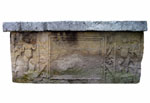
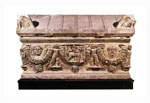
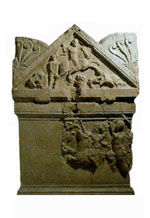
From the middle of 2nd c. until the end of 3rd c. marble and limestone sarcophaga were used mainly in the city centres of Moesia Inferior and Superior (Odessos, Tomi, Durostorum, Ratiaria, Oescus, Viminacium, Marcianopolis, Nicopolis ad Istrum, Skupi). Their introduction was under the influence of imported samples first in the Pontic cities and the city centers along the limes.
 |
 |
 |
 |
|
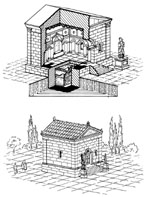
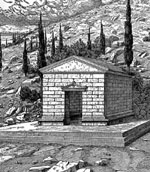
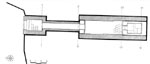
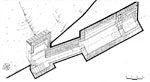
Often they were part of a large architecturally structured burial complex. The family mausoleums and tombs with a complex plan are the most impressive category of burial facilities. They were constructed near villa complexes (Montana, Urovene, Babovo, Chavdartsi, Lesicheri) or in the city necropolises (Odessos, Dionisopolis, Sostra). The known representatives of this type follow the rules of Greek-Roman architecture and an older Thracian influence has been witnessed in some of them (Babovo).
 |
 |
 |
 |
 |
The gravestones from the two provinces are related to the burial complexes. The construction of a gravestone is a practice which does not have a pre-Roman tradition in the reviewed territory outside the west-Pontic cities. The introduction of Roman forms of gravestones began in 1st c. under the influence of the military divisions located in Moesia.
Mario Ivanov
Atanasova J. - Атанасова Й. Погребения от некропола на Рациария. – Известия на българските музеи, 1, 1969, 57-88.
Valcheva D. - Вълчева Д. Погребения с трупоизгаряне в могилите от римската епоха в България. В: Първи международен симпозиум “Севтополис. Надгробните могили в югоизточна Европа“. Казанлък 4-8 юли 1993. Велико Търново, 1996, 94-96.
Getov L. - Гетов Л. Погребални обичаи и гробни съоръжения у траките през римската епоха (I – IV в.). – Археология, 1970, 1, 1-12.
Dimitrov D. - Димитров Д. П. Надгробните плочи от римско време в Северна България. София, 1942.
Zotovich l, Jordovich Ch. - Зотовиħ Л., Jордовиħ Ч. Viminacium. Некропола “Више гробальа“. Београд, 1990.
Ivanov D. - Иванов Д. Гробницата-мавзолей край с. Бабово и нейните древнотракийски паралели. – Terra Antiqua Balcanica, 3, 1987, 99-105.
Jovanovich A. - Jовановиħ А. Римске некрополе на териториjи Jугославиjе. Београд, 1984.
Kitov G., Shalganov K., Krainov I. - Китов Г., Шалганов К., Крайнов И. Траките в Ловешки окръг. София, 1980.
Mikulchich I. - Микулчиħ И. Ранноримски скелетни гробови из Скупа. – Старинар, 24-25, 1973/1974, 89-102.
Radev R. - Радев Р. Някои наблюдения върху некрополите в Североизточна България от V – I в. пр. н. е. – Хелис, I, 1992, 120-133.
Alexandrescu-Vianu M. Les stèles funéraires de la Mésie Inferieure.- Dacia, 1985, 29, 1-2, 57-88.
Alexandrescu P. Types de tombes de la nécropole tumulaire d’ Histria. – Dacia, 1965, 9, 163-184.
Barbu V. Din necropole Tomisului. – Studii şi cercetari de istorie veche, 22/1, 1971, 47-68.
Conrad S. Die Grabstelen aus Moesia Inferior. Untersuchungen zu Chronologie, Typologie und Ikonografie. Leipzig, 2004.
Koch G., Sichtermann H. Römische Sarkophage. München, 1982.
Mocsy A. Geselschaft und Romanisation in der römischen Provinz Moesia Superior. Budapest, 1970.
Petre A. La romanité en Scytie Mineure. Bucarest, 1987.
Preda C. Callatis. Necropola romano-byzantina. Bucureşti, 1980.
Theodossiev N. North-Western Thrace from the Fifth to First Centuries B.C. – British Archaeological Reports, International Series 859. Oxford, 2000.